Saturday, April 11, 2009

Spheres of exclusivity

I've noticed is that academic groups tend to segregate. They form spheres of exclusivity where their idiomic expressions, vocabulary, and humor is directly tied to their study. Not only are these exclusionary against newbies who must learn the verbiage in order to feel a part of the group, but it puts off people who may have interest in the subject but are put off by the isolation of the people in the subject.

The best way to become a part of more spheres is to try more activities. Also, taking varied classes helps--this is easy for me to do, as a high school student. Reading more books helps, though it is hard to find good reads that introduce you to topics. The Internet is a good way to browse and pick up knowledge. I personally enjoy surfing Wikipedia surfing because the articles are linked to one another.

It is good to be part of more spheres. It benefits you by allowing you to connect to more people and have larger social networks to tap into. The best leaders and communicators understand their followers and audience and adapt their message, and by tailoring your language to the spheres, you can understand and connect to people better.

Some spheres I can recognize:
Running: PRs, splits, and paces are common phrases here. There is, unlike the other spheres below, less vocabulary to learn. However, there are certain practices, such as stretching, warming up, interval training, and on-off cycles that have to be learned.

Music: Music, with its Italian phrases, notation, and specific way it is read, is a daunting language to learn. What is interesting is that even within music, there are conflicting branches of modern music and classical music, each with their own focus, purpose, and mindset. Of all the spheres, the musical one is probably one of the largest-encompassing.

Robotics: This is techspeak. It takes time getting used to people telling you to "jig up the piece so I can Tig it" or to "broach the hub with the three sixteenth." In addition, it takes time to learn to operate the machinery.

Chemistry: Lots of notation. Stannous hydroxide, ferric oxide, 2-dimethyl propane, cuppric-tetraphenylporphine, etc. Chemistry also introduces an abstract mindset that many are not used to.

Physics: The subject of equations. Only to a person familiar with them do the variables make sense. Below, the equation for potential energy:Biology: Anatomy is a pain to learn. Even though human anatomy is generally more accessible because people can correlate to their own body, a lot of the time the nomenclature does not make sense.

Math: Take this expression for the formal definition of a limit:

In English, it reads that "for each real ε > 0 there exists a real δ > 0 such that for all x with 0 < |xc| < δ, we have |f(x) − L| < ε." Only in certain branches of math is this sort of complicated defining and variable manipulation common. However, in all the others there is an exactness--the answer has to be exactly on the spot or it is wrong-- that puts people off.

Programming
: Not only does it consists mostly of mathematical operators, but the "sentence" structure is completely foreign. Also, to many, programming poses a completely new way of thinking that people are just not used to with its symbolic manipulation.

Literature: The vocabulary for analyzing literature isn't used widely. Words such as pastiche, deus ex machina, metonymy, enjambmen, aysndeton, and other literary devices. However, what makes literature different from the other spheres is that it appeals to the common person and that this vocabulary is not necessary for fully appreciating the prose.

Wednesday, April 8, 2009

Ebert on Bill O'Reilly

On Robert Ebert's site there is an excellent article on Bill O'Reilly's decision to add the Chicago Sun-Times to the Hall of Shame. Good stuff:
I understand you believe one of the Sun-Times misdemeanors was dropping your syndicated column. My editor informs me that "very few" readers complained about the disappearance of your column, adding, "many more complained about Nancy." I know I did. That was the famous Ernie Bushmiller comic strip in which Sluggo explained that "wow" was "mom" spelled upside-down.
My favorite part:

That reminds me of the famous story about Squeaky the Chicago Mouse. It seems that Squeaky was floating on his back along the Chicago River one day. Approaching the Michigan Avenue lift bridge, he called out: Raise the bridge! I have an erection!

Bill O'Reilly should be esteemed to have been insulted by such a renowned and excellent writer.

Gay marriage legalized in Vermont

Vermont became the fourth state to legalize gay marriage but the first to do so with its legislature. Its Congress voted 23-5 (Senate) and 100-49(House of Reps) to override Governor Jim Douglas' veto of a bill that would have legalized it.

The other three states, Massachusetts, Connecticut, and Iowa all legalized gay marriage through the courts, which is not as solid as a legislative legalization because it can be overturned easily.

Via burlingtonfreepress.

Monday, April 6, 2009

Goat on camel

Sunday, April 5, 2009

Radiohead testifying against RIAA

Radiohead, which gave away its record for free but requested a donation, is going to testify against
the record labels which it views unfairly targets the listener without consulting with the artist. Since Radiohead had no problem with money despite its distribution technique, it serves as an example that the music industry does not necessarily have to charge money to earn a profit. In doing so, Radiohead takes a stand to help wrestle power from the record labels to the artists.

Via torrentfreak.

Wednesday, April 1, 2009

Happy April Fool's Day!

Some of the jokes I've seen:

Starcraft 2: The terratron, which is basically a transformer assembled from your base. From the video, it seems like a command center forms the head and bunkers are the foot pads.

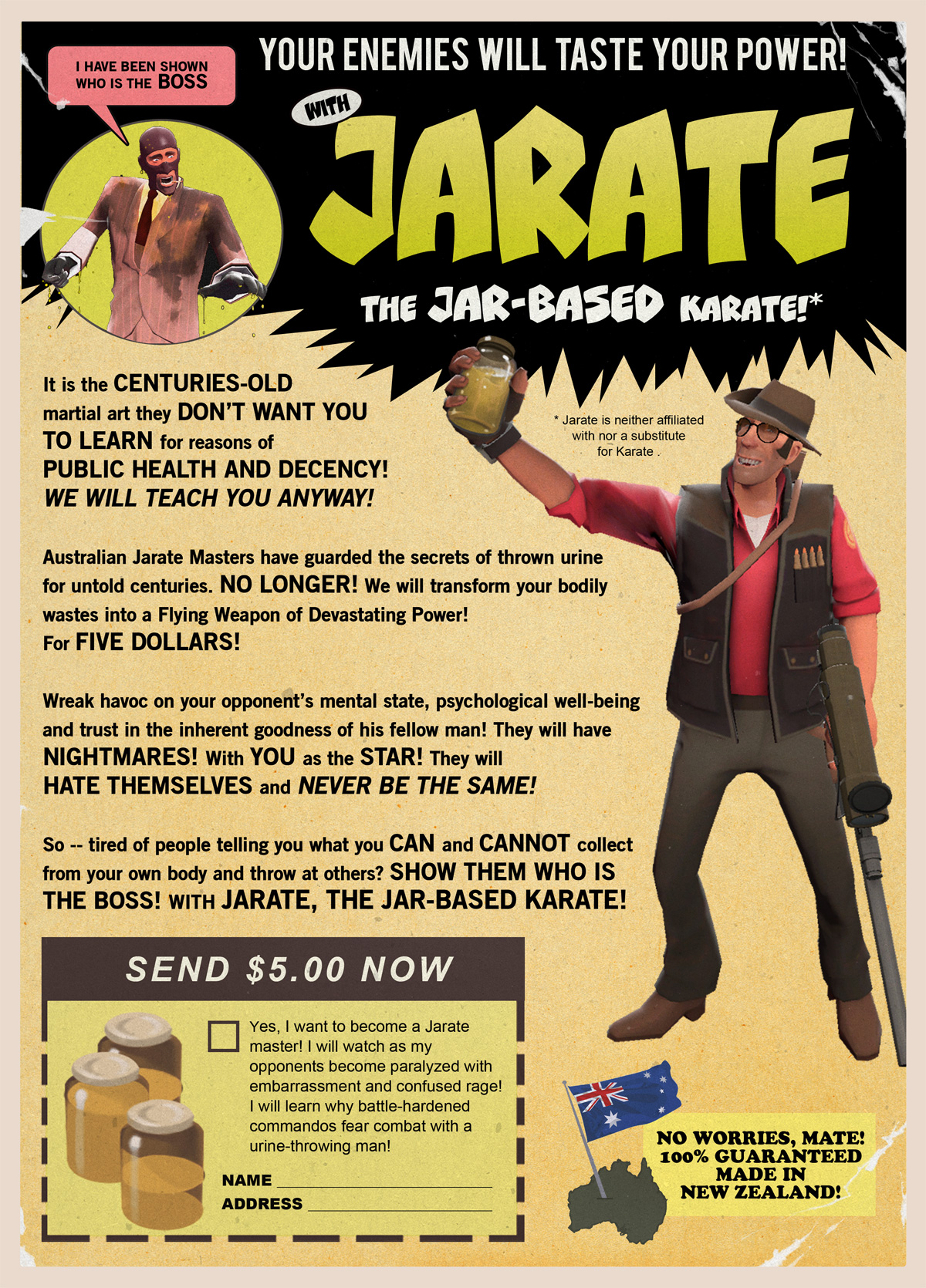
Team fortress 2: The Jarate pee jar.

For some of the day, Youtube flipped the video and reversed the text.

Google CADIE, or Cognitive Autoheuristic Distributed-Intelligence Entity. It has its own blog that includes a video and

Gmail Autopilot, which would answer emails for you.

Google Chrome in 3D. It suggests you begin by printing out your 3-D glasses then enabling 3-D with a special option in Chrome.

Gizmodo cleansed itself of a "worm" that was messing up the site.

Amazon's cloud computing, or Floating Amazon Cloud Environment (FACE) that would consist of giant helium balloons.

Reddit for a while looked like Digg.

Fark looked like Facebook.

Sqeez Bacon. From the same site, interactive portal shirts.


Pizza Hut creating portrait pizzas.

Warner Brothers is acquiring the Pirate Bay.

Expedia is offering flights to Mars.

Obama ordered all Chevies and Dodges out of NASCAR.

The Guardian announced that it was moving completely to Twitter. The headline: "Twitter switch for Guardian, after 188 years of ink."

Al Gore announced a new line of Vegan food.

A yodeling game for the Xbox.

Yahoo! added an Ideological search where you can search for terms then clarify to search only within Republican or Democratic sources. This one probably isn't an April Fool's Joke, as it works well.

Running and aging

Does running accelerate or postpone aging?

There are obviously the health benefits associated with running consistently. The most direct result is lower body fat because it is all burned while running. Over time, running strengthens your cardiopulmonary system, increasing your blood vessels' flexibility because of the contraction they get during running. Your blood pressure decreases as the resistance the arterial walls have to the heart's pumping of blood decreases. Also, because they are worked while running, your muscles increase their efficiency in utilizing oxygen.

As your muscles, heart, and lungs are used more often, they begin to work at a higher rate even when you're resting. This raises your metabolism, allowing you to stay warmer and eat more since your body will digest the food quickly. However, one problem with a higher metabolism is that it increases the amount of free radicals. These increase aging by damaging cells and tissue. This is like a burning candle as the brighter it burns, the faster it goes out.


There are mental benefits from running. Impelling yourself to go out everyday for a run takes energy and compulsion. This keeps your drive to commit strong because it makes you exercise that every time you do not want to run but still do. Running is also anti-stress as the endorphins that are released to block the pain also relieve tension and anxiety.

Because running causes small injuries to muscle and tissue that are repaired even better than before, it strengthens them. Running wears down joints and connective tissue, especially in the ankles and knees. This could eventually spell the end of regular runs as the small wear and tears on your system add up.

Of course, according to time dilation, the faster you move, the slower time moves for you. So, if you spend your life moving faster, you will end up slightly younger than someone who was more sedentary :-)

Running takes time. In all, including stretching, transportation, acquiring music, getting proper clothing, it takes roughly an hour a day. Depending on the circumstances, this hour could be better put to use sleeping.

The positive aspects outweigh the negative ones here, so in summary, it is much better to run than to not. Even though a few consequences of running increase aging, altogether they help to make you younger and more energetic.